

I will tell you the truth about how I got here. Until a few years ago, horse racing was the one sport I never bothered to read about. I knew the name Seabiscuit the way everyone knows the name, and I figured the good stuff was for people who understood furlongs and morning lines. Then my father-in-law, a quiet man who had not said much of anything for years, said one word at dinner one night: Biscuit. It took me an afternoon to find out what he meant, and that afternoon turned into the best run of reading I have had in a long while.
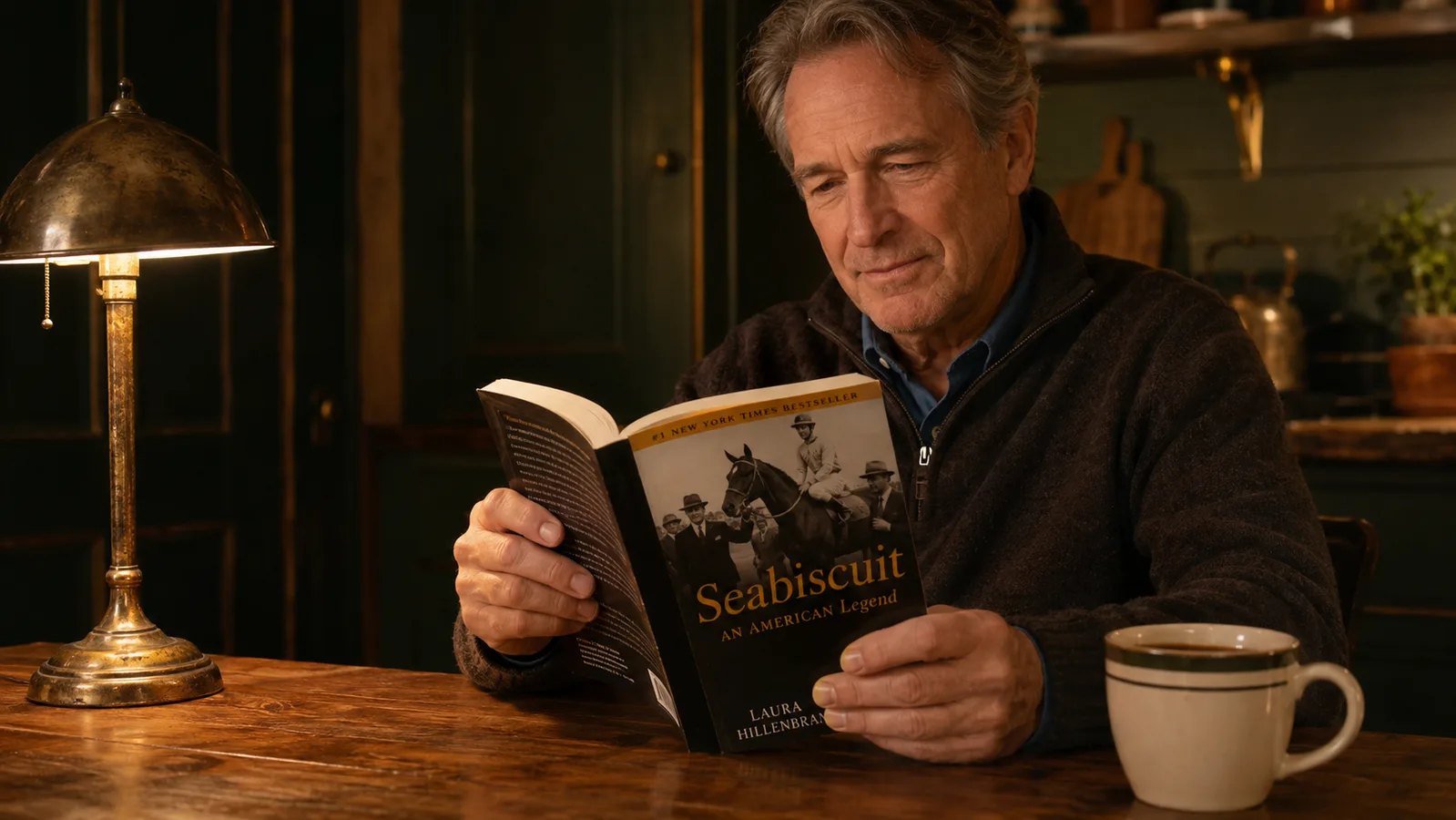
Here is the surprise. You do not need to know a furlong from a finish line to love a horse racing history book, because the great ones are American history first and sports history second. They are stories about people and animals and a country, told at night with the lamp on. The book that started it for me was Laura Hillenbrand's Seabiscuit, and that is the one every reason below comes back to.
One racing history has been turning non-fans into readers for twenty years
Laura Hillenbrand's Seabiscuit is the book people hand to the skeptic in the family, and it has sat on more nightstands than any other sports history of its era. Start there, then come back for the ten reasons below.
Amazon Check Today's Price on Amazon →Horses become characters, not betting lines
Seabiscuit is the proof. He stood small for a thoroughbred, all chest and stubbornness, with a strange, rolling stride that made the grooms laugh. He lost more races than he won on the way up, and Laura Hillenbrand gives you the horse the way a novelist gives you a person: how lazily he dozed, how stubborn he could be about a bath, how he woke up the instant he heard the starting bell. He is one of the most vivid characters in any history book I own, and he weighed about a thousand pounds.
A whole decade makes sense in one book
Hillenbrand drops Seabiscuit into the Great Depression, and the Depression stops being a chapter you slept through in school. You watch working families pour through the gates of the new Santa Anita track with a few dollars and a day of hope, and you understand in your bones why a radio call of two horses running could make a third of the country stop in place.
The names you have always heard finally mean something
Man o' War. War Admiral. Seabiscuit. You have heard those names your whole life without knowing why they mattered. This book gives each one a face and a temper. War Admiral, a champion with a fierce streak who fought his own handlers, becomes the foil the story needs, and you will never hear his name the same way again.
The underdog story is real, not a fairy tale
Seabiscuit started out a loser. He lost his early races badly enough that his first owner let him go for a pittance, which in racing terms meant take him away. A California car dealer named Charles Howard, still grieving his son, and a weathered old trainer named Tom Smith rebuilt him with patience and timing. It is not a Disney version of a comeback, and that is exactly why it lands.
The humans around the horse are the cast you will remember
Red Pollard lost the sight in one eye in an accident and kept that quiet so he could keep riding. Charles Howard had built a fortune selling cars and then buried a son. Tom Smith, the frontier trainer, did not want to talk much about any of it. Hillenbrand takes every one of them as seriously as she takes the horse, and that is exactly what a history should do.

One race teaches you the whole sport
The 1938 match race between Seabiscuit and War Admiral at Pimlico is the centerpiece, and it teaches you the game without a single boring paragraph about rules. You learn the starting gate, the pace, the jockey's rig and the crowd, all inside a story that ends with Seabiscuit four lengths ahead of the Triple Crown winner.
History that reads like a novel actually stays with you
I have read sports histories that felt like homework, nothing but results and trades and moves. This is not that. The research is all there in the back of the book, but it never sits on the page. What stays with you are pictures: a horse working at dawn on a lonely California beach, a penniless jockey sleeping in a barn stall, a crowd roaring somewhere you can almost hear.
Amazon Read racing history the way it was meant to be told →
A safe gift for the person who says they hate sports books
I now buy this book for people I would never have handed a sports book to. My sister, who cannot name a single jockey, read it in a week. A retired neighbor whose whole racing memory is one afternoon at the track read it twice. If you are shopping for a reader in the family who thinks sports history is not for them, Hillenbrand's paperback is the dependable answer.
Amazon The gift for the reader who says no to sports books →
It settles the arguments at the table
Every family has the one who insists horses were tougher in the old days and the one who insists the modern game is faster. A book built on real archives hands you the receipts for both sides. Hillenbrand dug through race charts, letters and newspapers to rebuild the era, so when the argument starts you are not quoting a statistic, you are telling a story with the goods behind it.
You will cheer out loud in an empty room
Seabiscuit tore a ligament in 1939 and the vets said he might never race again. Red Pollard climbed back on, still fighting with one good eye. In the 1940 Santa Anita Handicap the old horse gave everything he had, and I will tell you honestly, I was alone, it was past midnight, and I said come on out loud at the page. A history book that does that to a grown man earns its place on the shelf.
What I'd Skip
Skip the racing histories that read like a ledger of past performances, the ones that only track winners and times, and know one honest limitation of Seabiscuit in particular. It is the story of one horse and one era, the Depression years into 1940. It does not flinch from the dark side of the sport either, the worn-out horses and the owners who sold them when they were done. If you want the full sweep of a century of racing, you will finish this book wanting the next one, which is the nicest thing you can say about a history.
Forty million people, a third of the whole country, stopped what they were doing to listen to two horses run.
Somewhere in this list is the reason that sounds like you: the era, the characters, the comeback, the gift. That is the whole point. A good racing history is not about knowing the sport. It is about being handed a story good enough to carry into the evening, and I can tell you exactly where to start.
The book I hand every skeptic in my family
Seabiscuit is the reason I started reading racing history at all, and it is still the one I buy for other people. Check today's price, and if it fits, clear a spot on the nightstand.
Amazon See Today's Price for Seabiscuit →